

What Causes Drain Backups in Detroit?

Drain backups are one of the most common plumbing problems Metro Detroit homeowners face, and they almost always have a specific, identifiable cause. Understanding what is actually behind the backup helps you choose the right solution and avoid wasting money on temporary fixes that do not address the root of the problem. Here are the most common causes we encounter in Detroit, Dearborn, Livonia, Warren, Royal Oak, and the surrounding area.
Tree Root Intrusion
Roots are the leading cause of sewer line problems in Metro Detroit, and for good reason. The region's established tree canopy, including the mature elms, oaks, and maples that line residential streets throughout Wayne, Oakland, and Macomb counties, means millions of root systems are constantly searching for water and nutrients. Clay pipe lateral lines, which are still extremely common in homes built before the 1980s, develop small cracks and joint separations as they age. Tree roots find these openings and grow inside the pipe, eventually filling it completely.
Cable snaking cuts a temporary path through a root mass, but the roots regrow quickly. Hydro jetting combined with mechanical root cutting using a tool like the Warthog WT Classic removes the entire root mass flush with the pipe wall and dramatically extends the time before roots return.
Grease and Fat Buildup
Grease is the dominant cause of commercial sewer backups and is increasingly common in residential lines as well. Grease poured down a kitchen drain cools as it moves through the pipe, solidifying on the pipe wall and reducing the diameter of the line with every subsequent pour. Over months and years, the grease layer becomes thick enough to trap other debris, eventually blocking flow almost entirely.
The only effective way to remove a grease layer is hydro jetting, which cuts through the buildup and flushes it from the system. Chemical treatments warm the grease temporarily but do not remove it, meaning it re-solidifies further down the line.
Aging and Deteriorated Pipe
A large portion of Metro Detroit's housing stock dates from the 1950s, 1960s, and 1970s, and many of these homes still have the original sewer lateral. Clay and cast-iron pipes are durable, but they do not last forever. Joint separation, pipe sagging that creates low spots where debris collects, and cracking caused by soil movement or root pressure all reduce sewer performance progressively.
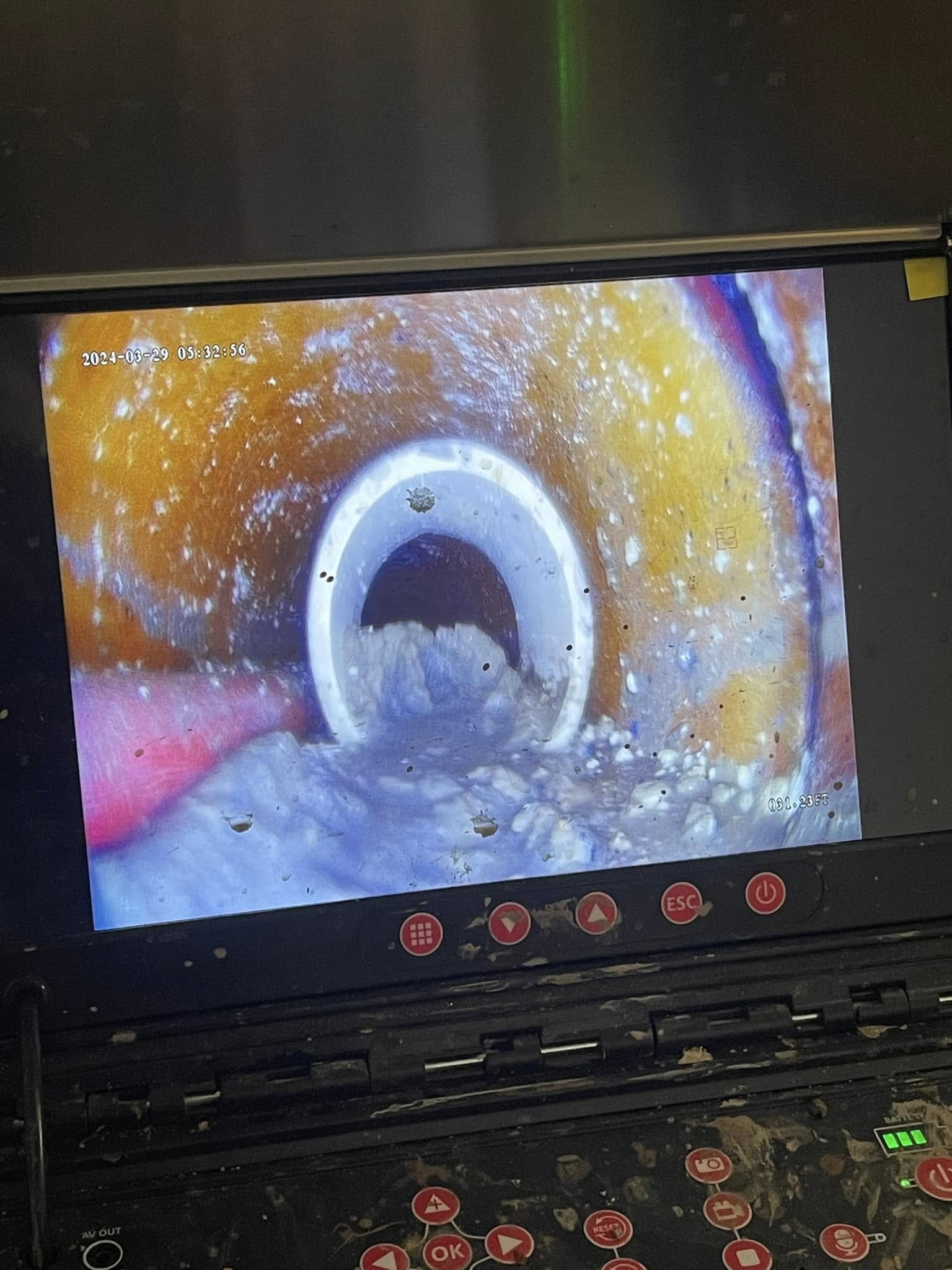
When an aging pipe has deteriorated beyond the point where cleaning alone helps, video camera inspection makes the condition visible without any digging. Many homeowners who feel like they have a perpetual drain problem discover through camera inspection that the pipe condition is the issue, and that targeted repair or lining resolves what years of periodic snaking never could.
Flushed Non-Flushable Items
Wipes marketed as flushable, paper towels, hygiene products, and other items that do not break down in water are responsible for a significant number of residential backups, particularly in households with children. Unlike toilet paper, these materials do not dissolve; they accumulate in the lateral or at bends and connections in the line.
City Main Involvement
Sometimes the blockage is not in your private lateral at all, but in the municipal sewer main running along the street. When the city main is blocked or at capacity, backups push upstream into private laterals and basements. Detroit Sewer Co. can document the condition of your private line through camera inspection and, when the issue is in the city main, provide the evidence you need to pursue a service request with your municipality.
If you are dealing with a backup or slow drains in Metro Detroit, text Detroit Sewer Co. at 734-556-2035 around the clock. We diagnose the actual cause and fix it properly.